From Dream Puppy to Chaos Agent: Understanding Why Your Dog Seems Like a Different Animal at Six Months
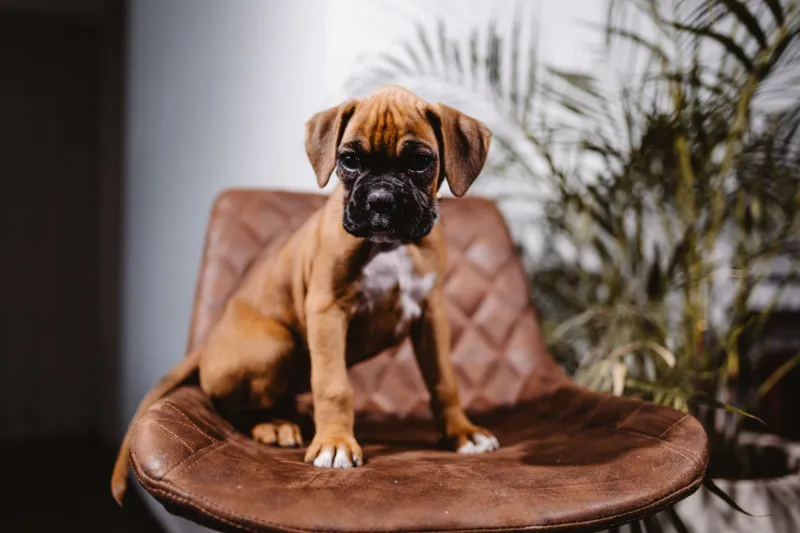
You did everything right. You researched breeds, asked the hard questions, visited the kennel, met the parents, reviewed the health clearances. You brought home a puppy who was calm and curious and seemed to be everything you hoped for. And then — somewhere around month five or six — that puppy disappeared and was replaced by a creature you barely recognize.
You're not imagining it. And you didn't do anything wrong.
What you're experiencing has a name. Some people call it the puppy blues. Some call it the teenage phase. Whatever you want to call it, it's one of the most common reasons new dog owners reach out to us in a mild panic, convinced their well-bred pup somehow turned into a completely different animal. The truth is, in a very real neurological sense, they kind of did — and it's completely normal.
The First Eight Weeks: A False Sense of Calm
Here's something most people don't realize: the puppy you meet at six or seven weeks old is not showing you who they're going to be. That early sweetness, that easy-going quality, that tendency to just curl up in your lap and go to sleep — a lot of that is developmental. Young puppies are neurologically immature. Their brains are still forming the connections that will eventually drive independent behavior, stubbornness, fear responses, and all the other things that make adolescence so exhausting.
During the neonatal period (birth to about two weeks) and transitional period (two to four weeks), puppies are almost entirely focused on warmth, food, and their littermates. By the time they reach the socialization window — roughly three to twelve weeks — they're sponges. Everything is new and mostly non-threatening. This is why puppies at this stage often seem so adaptable and easy.
But the brain is still under construction.
Weeks Eight Through Sixteen: The Window That Matters Most
Once a puppy comes home, usually around eight weeks, they enter one of the most critical learning periods of their life. What happens during this stretch — the experiences they have, the people they meet, the sounds and surfaces and situations they're exposed to — will have a lasting impact on how they handle the world as adults.
This is also when most owners feel the most optimistic. The puppy is learning quickly, responding well to basic training, sleeping a lot, and generally acting like a small, manageable version of the dog you imagined.
Enjoy it. Because around four months, things start to shift.
The Fear Periods: Why Your Brave Puppy Suddenly Seems Terrified
Dogs go through at least two distinct fear imprint periods during development. The first typically hits around eight to eleven weeks (right when many puppies are heading to their new homes — timing, right?). The second arrives somewhere between six and fourteen months.
During these windows, a puppy's brain is essentially more sensitive to perceived threats. Something that didn't bother them at all three weeks ago — the sound of a garbage truck, a stranger in a hat, a dog they've met before — can suddenly trigger a big, dramatic fear response. This isn't regression. It's neurology.
If your previously confident puppy suddenly starts acting skittish or reactive, check the calendar. You might be right in the middle of a fear period. The best approach is calm, consistent exposure without forcing anything. Don't flood them. Don't coddle excessively either. Just keep moving forward, keep experiences positive, and let it pass.
Four to Eight Months: The Testing Begins
This is where a lot of owners start to feel like they've been deceived. The puppy who used to come when called now looks at you, makes direct eye contact, and trots in the opposite direction. The one who never chewed anything is suddenly destroying baseboards. The dog who seemed to have a solid "sit" has apparently forgotten that word entirely.
What's happening is that your puppy is developing independence. Their brain is producing more dopamine in response to novelty and exploration, which means the outside world is becoming genuinely more rewarding than you are — at least temporarily. This is a survival mechanism, evolutionarily speaking. It's also deeply annoying when you're standing in a park calling your dog's name.
Consistency is everything during this phase. Keep training sessions short and high-value. Don't give your dog off-leash freedom they haven't earned yet. And please, don't take it personally. They're not broken. They're just figuring out who they are.
Six to Twelve Months: The Adolescent Brain in Full Effect
If the four-to-eight-month stretch is the opening act, the six-to-twelve-month period is the main event. This is true adolescence — the canine equivalent of a fourteen-year-old who suddenly thinks they know everything.
Hormones are a major driver here, especially in intact dogs. Even spayed and neutered dogs go through significant hormonal fluctuations during this window that affect behavior, impulse control, and emotional regulation. Your dog may seem more reactive on leash. They may push boundaries they previously respected. They may regress on skills they seemed to have nailed.
It's also worth noting that different breeds move through these stages on different timelines. A Labrador and a German Shepherd and a French Bulldog are not going to hit the same milestones at the same age. Larger breeds tend to have longer adolescent periods. Some working breeds don't fully mature until they're two or even three years old. When we talk to buyers here at Applewood, we try to be upfront about what to expect based on the specific breed they're bringing home — because "18 months" is a rough average, not a guarantee.
Why Well-Bred Doesn't Mean Immune to Adolescence
This is the part that surprises people most. You met the parents. They were calm, stable, well-mannered dogs. You assumed the apple wouldn't fall far from the tree. And that's still probably true — but the apple has to fall first.
Genetics influence temperament, but they don't bypass development. Even the most well-bred puppy from the most stable lineage has to move through these same neurological stages. What good breeding gives you is a stronger foundation — a dog who is more likely to come out the other side of adolescence with a solid, predictable temperament. It doesn't skip the adolescence itself.
Think of it like a well-built house. Quality materials don't mean you skip the construction phase. They just mean the finished product is worth the work.
What Actually Helps During This Phase
A few things make a real difference when you're in the thick of the teenage phase:
Keep training going. Short, consistent sessions do more than marathon training days. Five minutes twice a day beats thirty minutes once a week every time.
Manage the environment. If your dog is stealing things, chewing things, or getting into trouble, that's partly on the setup. Crates, baby gates, and leashes exist for a reason.
Exercise the brain, not just the body. Mental stimulation — sniff walks, puzzle feeders, basic nose work — can take the edge off adolescent energy in ways that physical exercise alone can't.
Stay in touch with your breeder. A good breeder has seen this phase dozens of times across multiple litters. They can tell you whether what you're seeing is typical for the breed, offer specific advice, and remind you that this is temporary.
It Does Get Better
Somewhere around 18 to 24 months — sometimes sooner, sometimes a little later depending on the breed — the dog you always knew was in there starts to emerge. The chaos settles. The recall comes back. The personality your puppy's parents always promised starts to show up consistently.
The puppy blues are real, and they're hard. But they're also a phase, not a verdict. Stick with it. The dog on the other side of adolescence is worth every frustrating moment of the journey.