Forged in the Desert: How Arizona's Toughest Conditions Produce Applewood's Most Adaptable Family Dogs
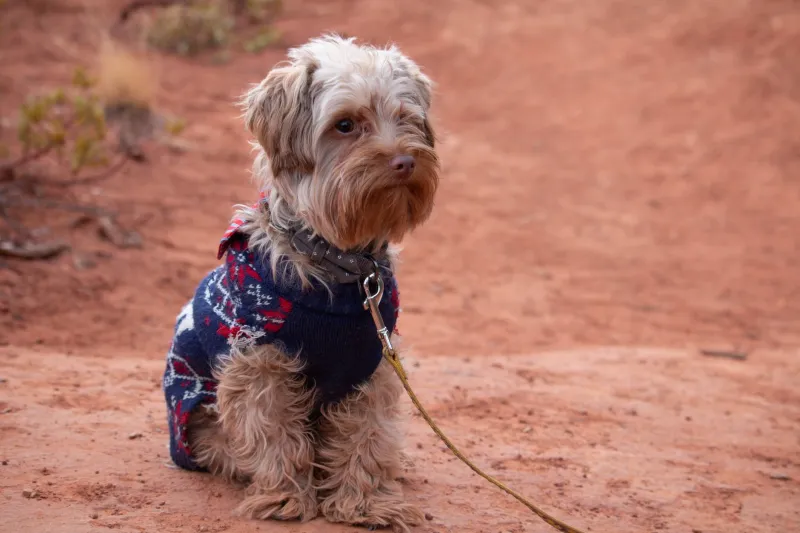
Let's be honest — Arizona is not the most obvious place to run a world-class kennel. When most people picture premium dog breeding, they imagine rolling green pastures somewhere in the Pacific Northwest or maybe a sprawling farm in the Midwest. The Sonoran Desert, with its scorching summers and relentless sun, doesn't exactly scream ideal puppy habitat.
And yet, we'd argue it's one of the best places in the country to raise a dog that's genuinely built for real family life.
This isn't just hometown pride talking. There's a real philosophy behind how Applewood Kennels AZ approaches breeding, and Arizona's unique environment plays a central role in it. Here's why we think the desert gives our dogs — and the families who bring them home — a distinct advantage.
Stress Is a Teacher, When It's Managed Correctly
There's a concept in developmental biology called hormesis — the idea that low-level stressors, applied at the right time and in the right dose, actually strengthen an organism rather than weaken it. It's why athletes train in altitude. It's why some plants grow stronger in wind.
The same principle applies to puppies.
A puppy raised in a climate-controlled facility with zero environmental variation might be comfortable, but it misses out on the kind of mild, manageable challenges that build adaptability. Arizona's environment — the heat, the dry air, the dramatic temperature swings between morning and evening, the variety of textures and terrain — creates a natural enrichment landscape that no indoor setup can fully replicate.
At Applewood, we work with that environment rather than shielding our dogs from it entirely. Puppies here learn to regulate their own comfort. They figure out when to seek shade and when to play. They experience real weather, real ground surfaces, and a sensory world that's genuinely complex. By the time they're ready to go home with a family, they've already practiced being adaptable.
Temperature Tolerance Runs Deeper Than You'd Think
One of the most common questions we get from buyers in other states is some version of: "Will a desert dog do okay in our climate?" It's a fair question, and the answer is almost always a confident yes — often better than dogs from more temperate regions.
Here's the counterintuitive part: dogs raised in Arizona's heat tend to develop better overall thermoregulation. Their bodies have been gently conditioned to manage warmth efficiently, which means they're not thrown off by a hot summer day in Texas, Florida, or the Carolinas. And because Arizona evenings can drop 30 to 40 degrees from afternoon highs, our dogs also experience genuine cold-weather exposure — just compressed into a single day rather than spread across seasons.
The result is an animal that's genuinely comfortable across a wider range of conditions than many buyers expect. That's not a small thing when you're talking about a dog that needs to live comfortably in your home, travel with your family, and spend time outdoors in whatever climate you happen to live in.
What Desert Selective Breeding Actually Looks Like
Environment alone doesn't make a great dog. Breeding philosophy matters enormously, and at Applewood, the two are deliberately intertwined.
When we evaluate breeding pairs, temperament is weighted just as heavily as physical health. We're specifically selecting for dogs that are calm under pressure — animals that don't escalate when the environment gets uncomfortable or unpredictable. In a desert climate, where the unexpected is basically a daily occurrence (a sudden monsoon, a lizard darting across the yard, intense midday heat followed by a cool evening breeze), dogs that panic or shut down simply don't thrive.
What does thrive? Dogs with steady nerves, curious but not anxious temperaments, and the kind of easy confidence that makes them great with kids, adaptable to new households, and low-drama in everyday situations. Those traits aren't accidents. They're the product of intentional selection, generation after generation, in an environment that constantly tests them.
We also prioritize physical resilience — strong joints, healthy coats that can handle both UV exposure and dry air, and cardiovascular fitness developed through active outdoor time rather than sedentary kennel life. A dog that has spent its early weeks exploring Applewood's outdoor spaces isn't just healthier on paper. It moves differently. It handles itself differently.
The Family Fit Factor
Here's where we get a little opinionated, and we'll own that.
A lot of breeding programs optimize for the show ring, the working field, or even just the quick sale. There's nothing inherently wrong with any of those goals, but they don't always produce the best family dog. Show dogs can be high-strung. Working dogs can be too intense for a suburban household. And dogs bred primarily for quick placement sometimes miss the deeper developmental work that produces a truly stable companion.
Our goal at Applewood is specifically the family dog — the one that fits into your actual life, not an idealized version of it. That means a dog that can handle the chaos of a household with young kids, the occasional skipped walk, the road trip to a new place, and the lazy Sunday afternoon on the couch. Versatility is the whole point.
Arizona's environment, combined with our breeding philosophy, naturally selects for that versatility. The dogs that do well here are the dogs that can do well anywhere. And that's exactly the kind of dog we want to place with your family.
A Final Thought on "Desert Bred"
We know "desert bred" isn't a marketing term you see everywhere. But for us, it's a genuine descriptor — a shorthand for a whole approach to raising dogs that takes the environment seriously as a developmental tool.
Arizona made us scrappy, adaptable, and a little tougher than we look. We like to think it does the same for our dogs. And if you're looking for a family companion that can keep up with your life no matter where that life takes you, we think that's worth something.
Come see what we're doing out here in the desert. We think you'll understand pretty quickly why we wouldn't trade it for those green pastures.